Start here: the castle is the easy part — pick how you get up to it
The castle’s own 2026 tariff sits beside the products on the tickets and prices page
What the entry ticket covers, and what it leaves to you
Read from the listing’s own inclusion and exclusion lists. It is the only one of the five that puts admission to the Château de Beynac in the price; the other four bring you to the village, the valley or the river below.
In the price
- Entry to the castle — valid one day from first use, walked at your own pace in about an hour. The rooms, in order.
- The exhibition — “Beynac in the time of Richard the Lionheart and Eleanor of Aquitaine”.
- The audio commentary — downloaded to your own phone at the entrance, in several languages, at no extra charge.
- A fixed date and a free change of mind — cancellation up to 24 hours before, and nothing to arrange on the day.
Not in it, or worth knowing first
- Parking. Every lot in the commune is paid, every day of the year. Which lot, and the walk from it.
- Food and drink. There is a bookshop and a picnic area; meals are the village’s business, not the ticket’s.
- A guide. The castle charges a supplement for a guided visit; the private tour is the listing that books one for you. What a private guide adds.
- Access. The castle states it is not suitable for visitors with reduced mobility: many steps, uneven floors, a spiral stair. The climb, in detail.
The visit, in order
From the car park to the spur terrace and back down to the river. About an hour is the castle’s own figure for the inside; the lane and the village are extra.
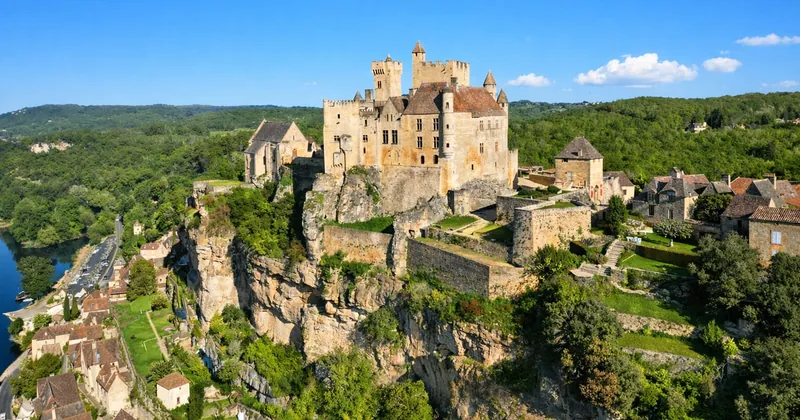
Beynac is not a ruin. The rooms are furnished, the ceilings are painted, the kitchen is still in place and the frescoes in the oratory are fifteenth-century, so the walk is a walk through a working household rather than through empty walls.
- Park, and pay for the hours you need ~10 min — Parking du Château and La Dîme sit at the top; place d’Alsace, Le Capeyrou, La Balme, Les Escassols and Le Crouzet sit below. There is no shuttle between them.
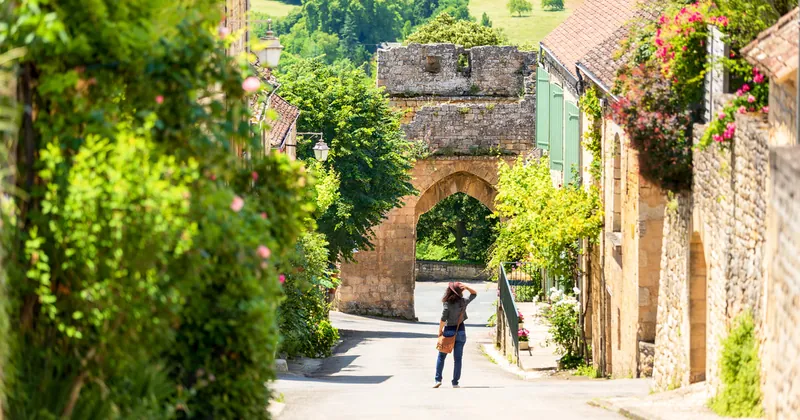
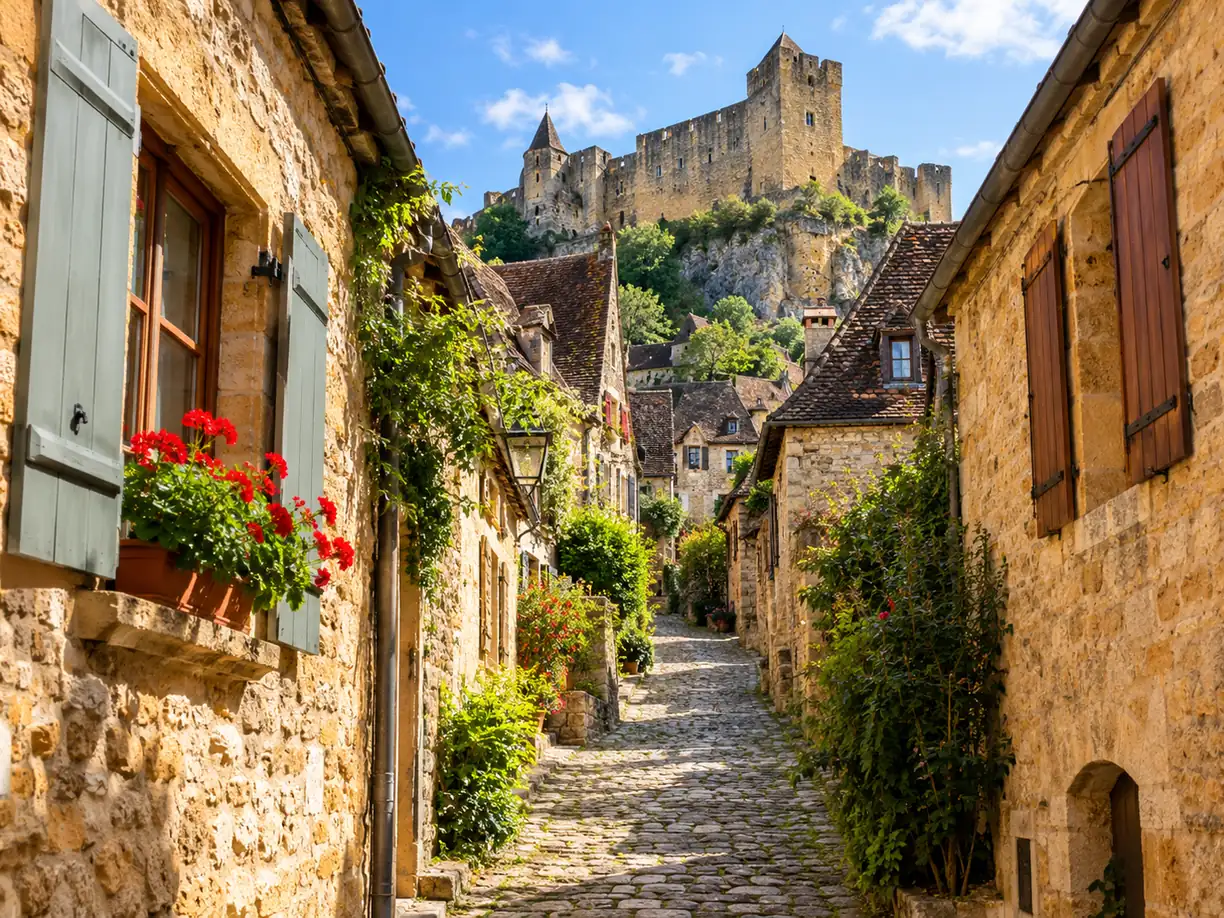
- The lane up through the village ~15 min — Cobbled lanes and golden-stone houses, the quarters the village calls barris. Ten to fifteen minutes up from the riverside lots, one or two from the upper car park.
- The barbican and the courtyard ~5 min — The nineteenth-century barbican, double crenellated walls and double moats — the layers a besieger had to get through before the keep was even in reach.
- The hall of the guards and the Salle des États ~10 min — The salle des gardes, then the hall where the four barons of Périgord — Beynac, Biron, Bourdeilles and Mareuil — met in the fifteenth century, with its sculpted Renaissance fireplace.
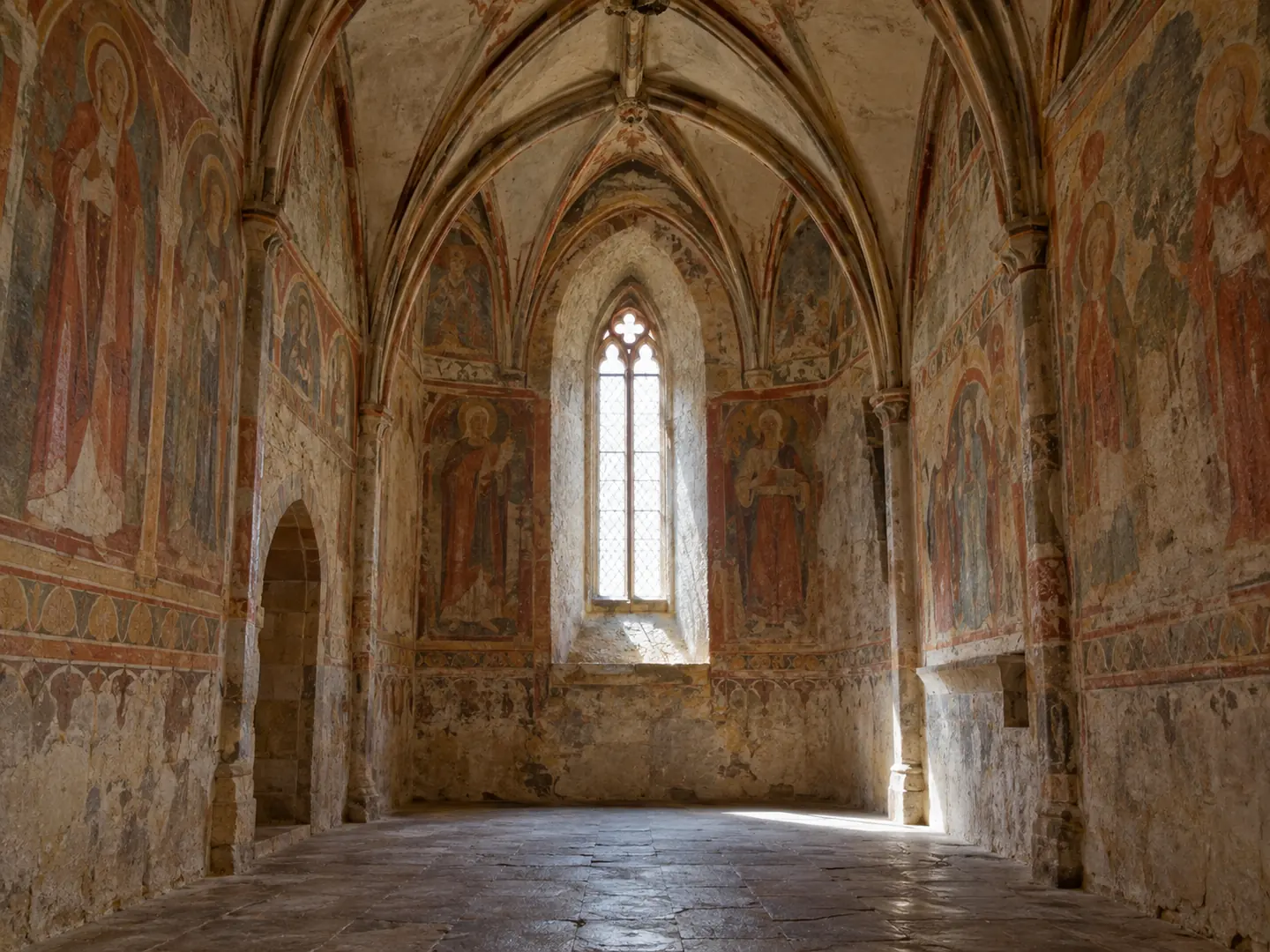
- The oratory and its frescoes ~10 min — Fifteenth-century painting: a Last Supper in which Saint Martial serves as maître d’hôtel, a Pietà, the dead Christ awaiting resurrection, and a Saint Christopher.
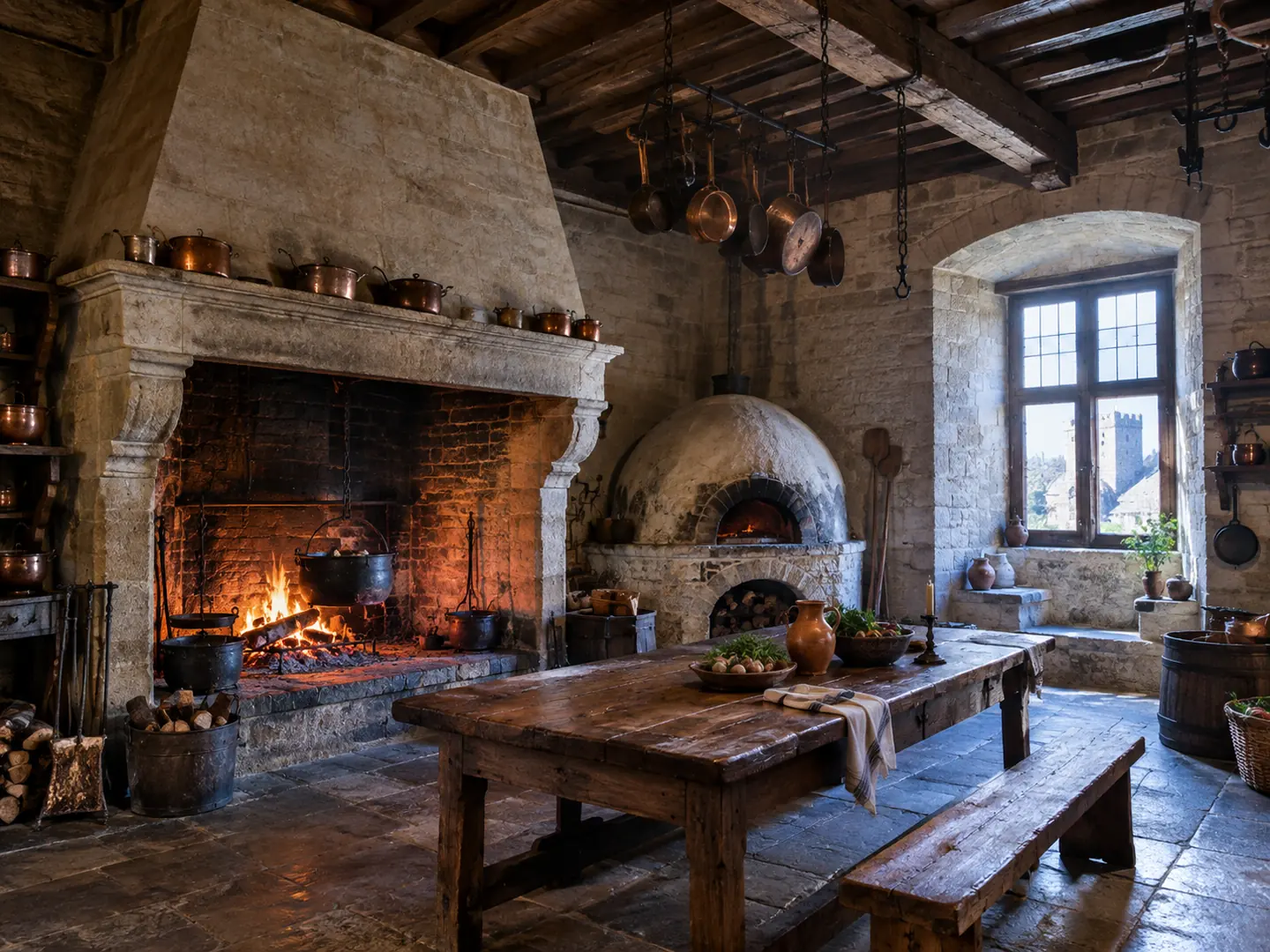
- The apartments and the kitchen ~10 min — Seventeenth-century woodwork and painted ceilings, the armoury room, monumental fireplaces, and the thirteenth-century kitchen with its bread oven and the ceiling hooks that kept provisions off the floor.
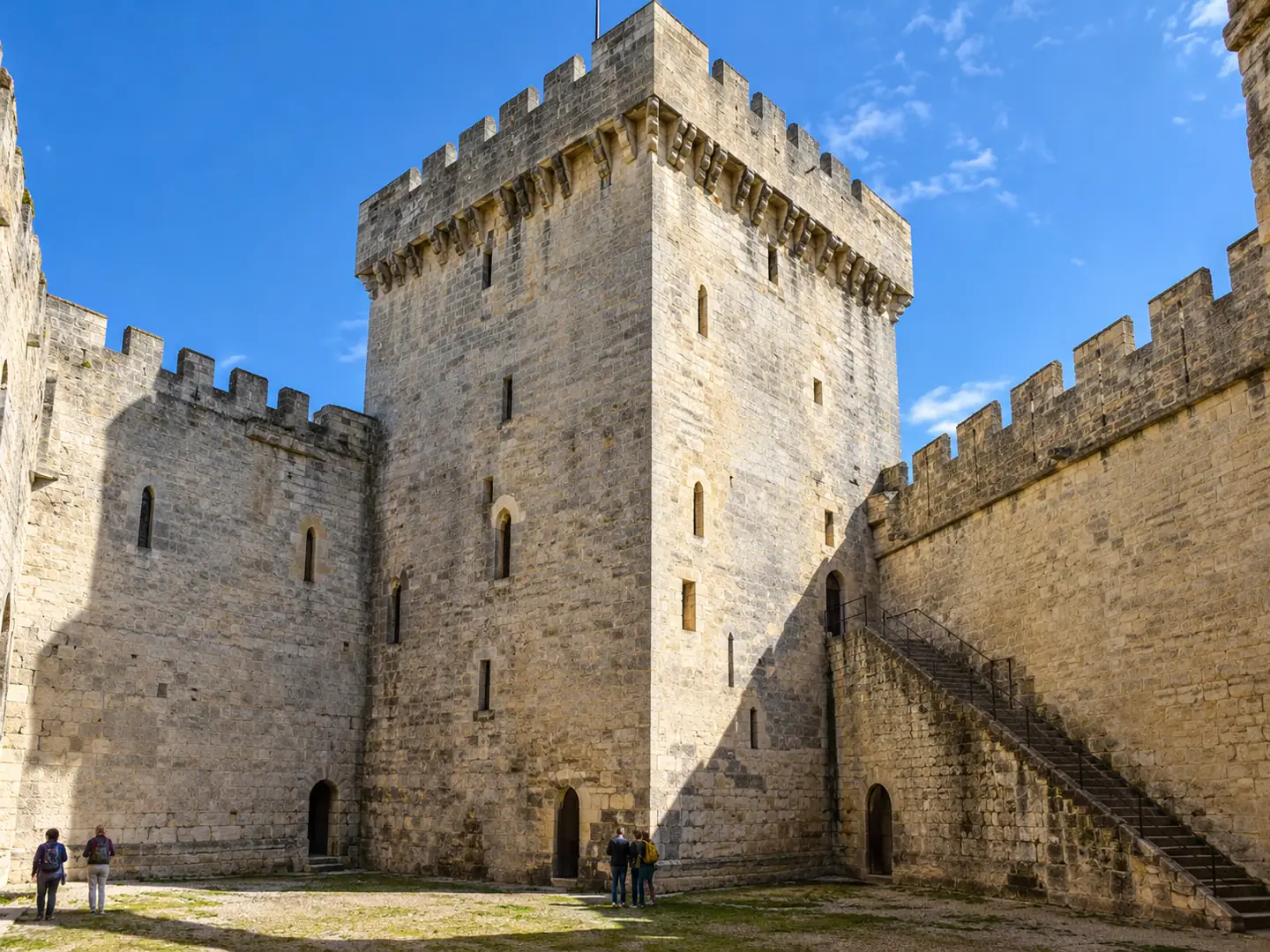
- The keep and the stairs ~10 min — The twelfth-century square keep, the oldest part of the castle, reached beside a spiral stair of the same age and a seventeenth-century open-work straight staircase in the Italian fashion.
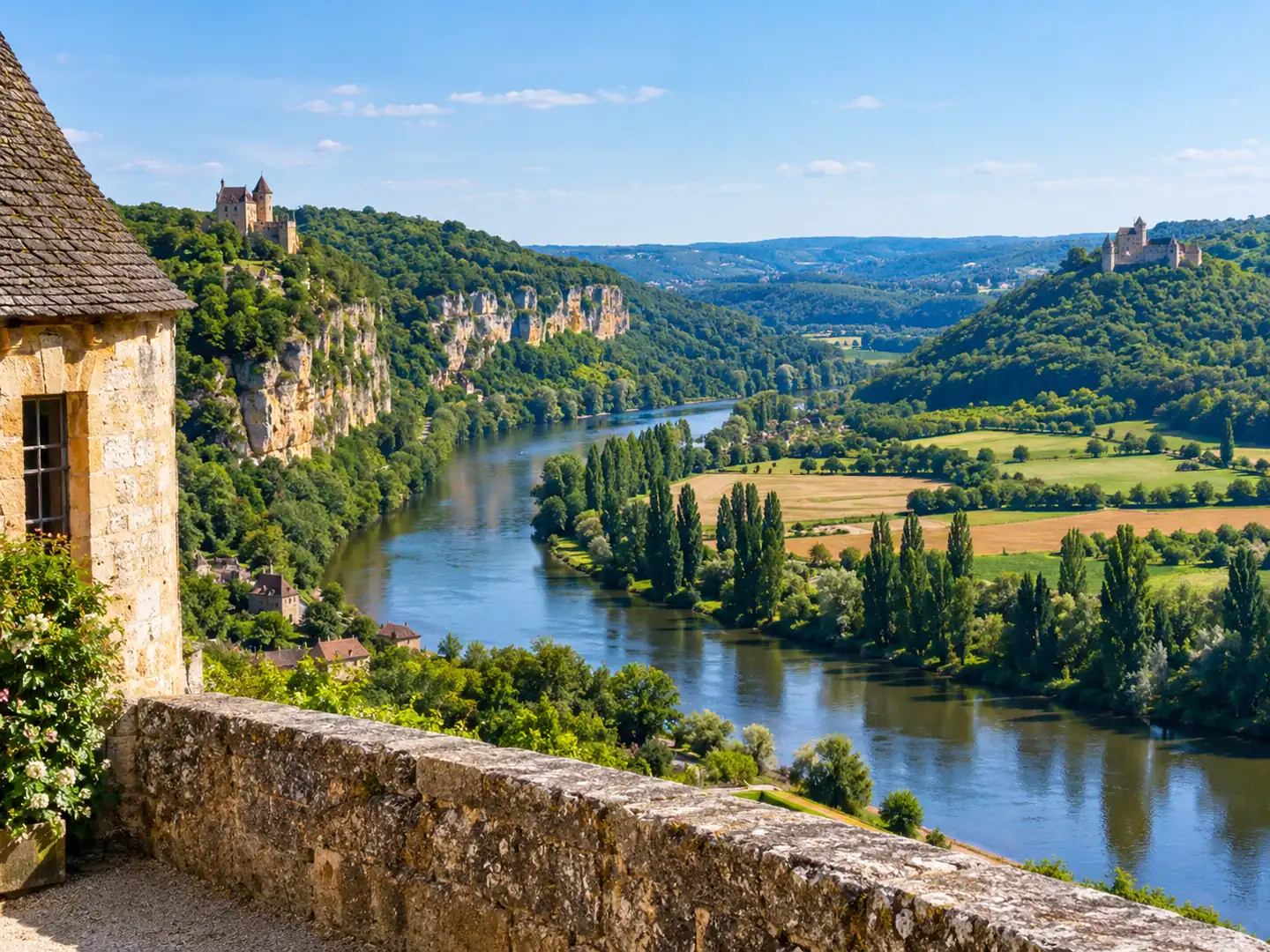
- The spur terrace, and five castles ~10 min — From the terrasse de l’éperon you see Beynac, Marqueyssac, Fayrac, Lacoste and Castelnaud at once. The castle’s own booklet and the Sarlat tourist office name the same five.
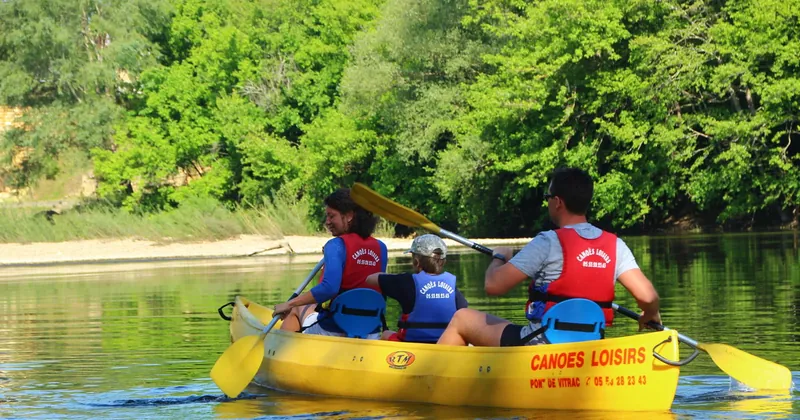
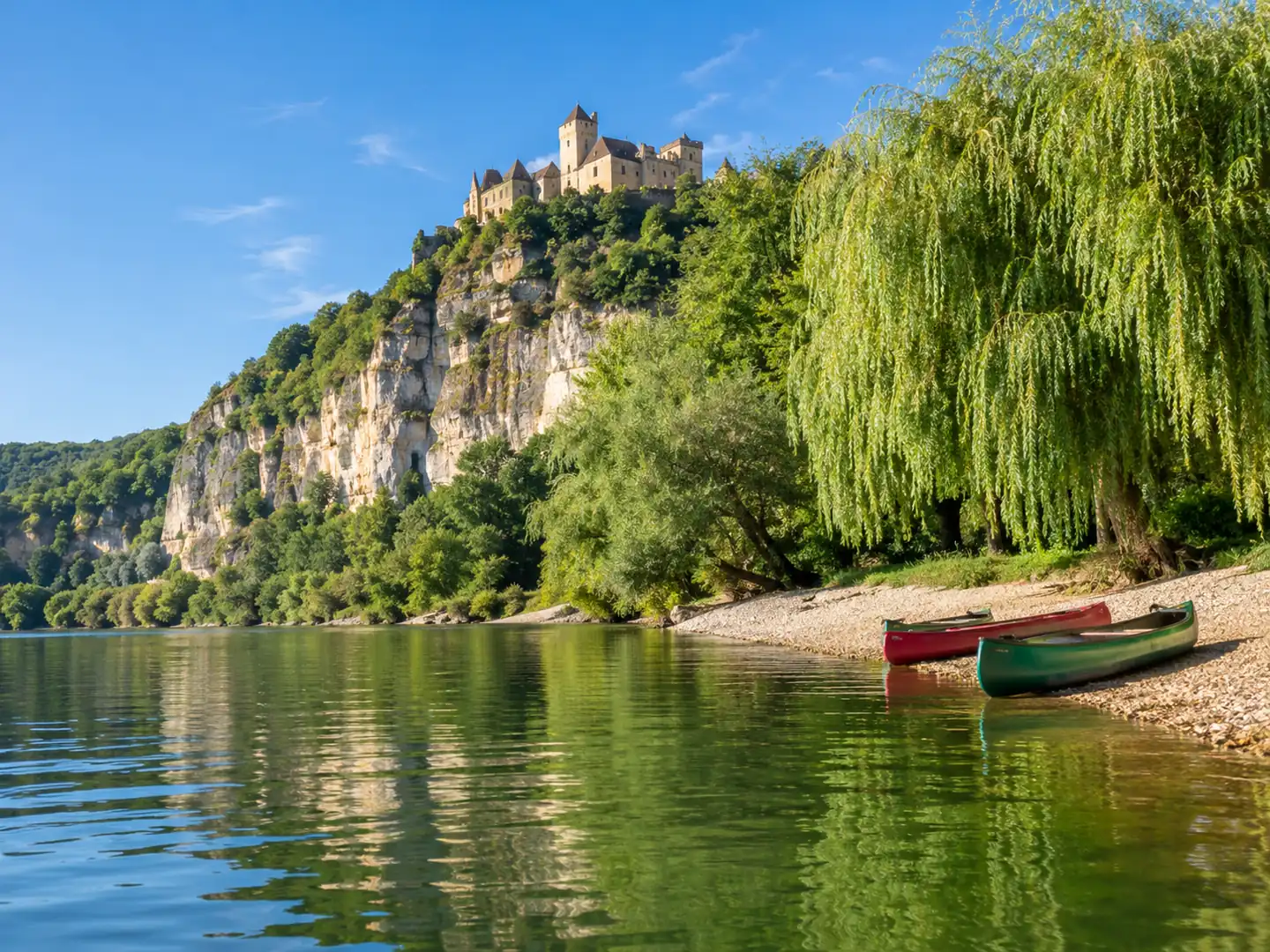
- Back down to the river ~15 min — The route des Gabarriers runs along the water below. From it the cliff and the keep read as one piece of rock, which is the view the canoes get.
The 2026 hours, season by season, are on the opening hours page, and the room list in full is on what to see inside. For the castle across the water, Beynac or Castelnaud.
How a visit is put together
Decide whether you are driving
With a car the question is which lot and how many hours. Without one, a tour from Sarlat is how most people arrive: outside high summer no scheduled bus stops in the village. Every way there.
Pick a date on the widget
The confirmation arrives by email and cancels free up to 24 hours before, so a date can be fixed now and moved when the weather is known.
Hold the date, then turn up
No reservation is needed for individuals, so a booking is about certainty rather than access: the date is held, the price is the one you saw, and it cancels free up to 24 hours before. The 2026 hours.
Give the rest of the day somewhere to go
An hour inside leaves most of an afternoon. The river, Domme, La Roque-Gageac and Castelnaud are what people fill it with. How long it really takes.
The dated entry ticket to the Château de Beynac
The one listing with castle admission in the price: entry, the exhibition on Richard the Lionheart and Eleanor of Aquitaine, and the bookshop, self-guided in about an hour and valid one day from first use. It rates 4.4 out of 5. Live dates and today’s price below.
Three ways to spend the day at Beynac
The dated entry ticket, the half-day tour from Sarlat that walks the village, and the private tour with a guided hour inside the castle. Today’s exact price is on each listing.
| Castle entry includedChâteau de Beynac: Entry Ticket to the Castle | From Sarlat: Beynac & Domme Tour & Dordogne Boat Ride | Sarlat: Private Tour to the Dordogne Valley | |
|---|---|---|---|
| Price per person | ~€17 | ~€110 | ~€163 |
| Duration | About an hour on site | Four hours | Three and a half to four hours |
| Castle admission | Included — the only listing that carries it | Not included — the Beynac stop is the village | Paid at the castle on the day |
| Inside the castle? | Yes, at your own pace | No — a guided walk of the village, 45 minutes | Yes, a guided hour |
| Getting there | Under your own steam, and paid parking | Van from Place Pasteur, Sarlat-la-Canéda | Private vehicle, pickup in Sarlat, Les Eyzies or Saint-Cyprien |
| Commentary | Audio on your own phone, several languages | Live guide in English; French on the boat | Private guide, English and French |
| The rest of the day | The village, the lanes and the terrace | A gabarre at La Roque-Gageac, then Domme | Domme, La Roque-Gageac and a viewpoint stop |
| Rating | 4.4 from 13 ratings | 4.6 from 162 ratings | 5.0 from 33 ratings |
| Free cancellation | ✓ Up to 24 h before | ✓ Up to 24 h before | ✓ Up to 24 h before |
| Book this → | View → | View → |
The five listings that reach the Château de Beynac
One includes admission, one walks the village, one guides an hour inside, and two pass under the cliff on the water. All five, sorted by situation.
 Castle entryCastle entry included
Château de Beynac: Entry Ticket to the Castle
 Most reviews
From Vitrac: Dordogne River Canoe Rental
 15 km route
Vitrac: Canoe/Kayak Dordogne Châteaux Route (15 km)
 Half day
From Sarlat: Beynac & Domme Tour & Dordogne Boat Ride
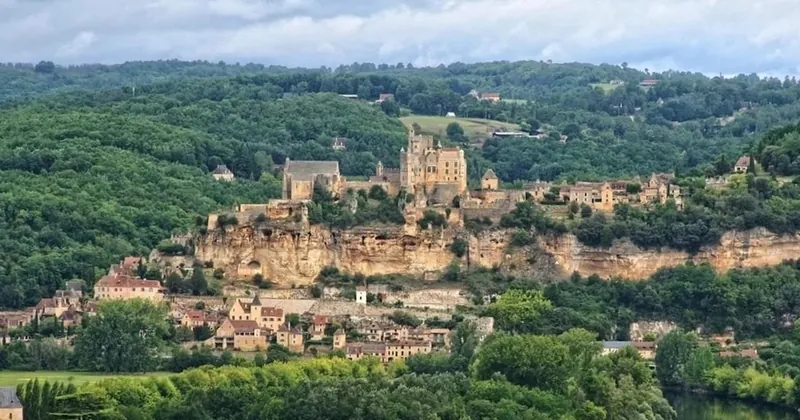 Private guide
Sarlat: Private Tour to the Dordogne Valley
What the castle and the village look like
The keep, the spur terrace, the lanes of Beynac-et-Cazenac, the frescoed oratory, the thirteenth-century kitchen and the Dordogne below. Click any photo to see it full-size.
What people wrote afterwards
Written reviews from the five listing pages, picked for what they say about the castle, the river and the guide. All five, reviewed.
A site to discover for its history, in magnificent surroundings.
An exceptional site, impeccably kept, with clear explanations of how the castle grew.
Best trip of the holiday.
Bring swimming things and something to eat — there are good places to stop along the way.
What made it was the guide’s knowledge.
David knew the historical sites well.
Ratings and reviews are the operators’ live GetYourGuide figures. Read our full tour reviews ›
Five things people ask before they go
Answered from the castle’s own notices, the commune’s parking order and the listings’ own inclusion lists.
Do I need to book anything?
A booking buys a fixed date, free cancellation up to 24 hours before and nothing to arrange when you arrive. The castle itself opens every day of the year and takes no reservation from individuals, so buying ahead is about certainty rather than access — and on four of the five listings it also buys the part of the day the castle does not cover. The five, sorted by situation.
Which listing includes castle entry?
One: the dated entry ticket, at around seventeen euros, which covers the castle, the exhibition and the bookshop. The private tour puts a guide with you for an hour inside and pays the castle’s own admission on the day; the half-day tour walks the village of Beynac instead; the two canoe routes pass below the cliff on the water. Tickets, and what each product adds.
How hard is the climb?
The castle sits more than 150 metres above the river. From the upper lots, Parking du Château and La Dîme, the entrance is a one- or two-minute walk; from the riverside lots it is ten to fifteen minutes up through the village, on cobbles. Inside there are many steps, uneven floors and a spiral stair, and the castle states it is not suitable for visitors with reduced mobility. The lane, and what to wear.
Can I get there without a car?
From Sarlat-la-Canéda, about 10 km away, yes: the half-day tour and the private tour both collect you there. A summer-only regional bus stops at Beynac-et-Cazenac roughly in July and August, with about six departures a day — check the current timetable before relying on it. Outside that window no scheduled bus stops in the village. Roads, stations and airports.
What does parking cost?
Every lot in the commune is paid, every day of the year, from eight in the morning to seven at night, by coin, card or app. Two hours is the minimum and the rate climbs by the hour to an eight-hour price, with a much higher eleven-hour rate above it, so buy the hours you need. Campervans pay the day rate plus an overnight charge, in two lots only. Every lot, and the tariff.
Can’t make these dates?
Browse more available Château de Beynac tickets and find one that fits your schedule — all with instant confirmation and free cancellation.
Visiting the Château de Beynac, explained
The Château de Beynac is a medieval fortress on a cliff more than 150 metres above the Dordogne, at Beynac-et-Cazenac in the Périgord Noir, and it opens every day of the year. It is preserved rather than ruined: furnished rooms, painted ceilings, fifteenth-century frescoes, a kitchen still in place. The awkward part of the day is not getting in. It is getting up there.
Getting there, and the car parks
Beynac-et-Cazenac sits about 10 km from Sarlat-la-Canéda, under twenty minutes by road on the D57, or on the D703 from La Roque-Gageac. Sarlat-la-Canéda is the nearest station, and Bergerac, Brive and Bordeaux-Mérignac are the airports the region uses. A summer-only regional bus stops in the village, roughly July and August, with about six departures a day — check the current timetable before relying on it, because outside that window no scheduled bus stops here at all. Roads, trains and the bus.
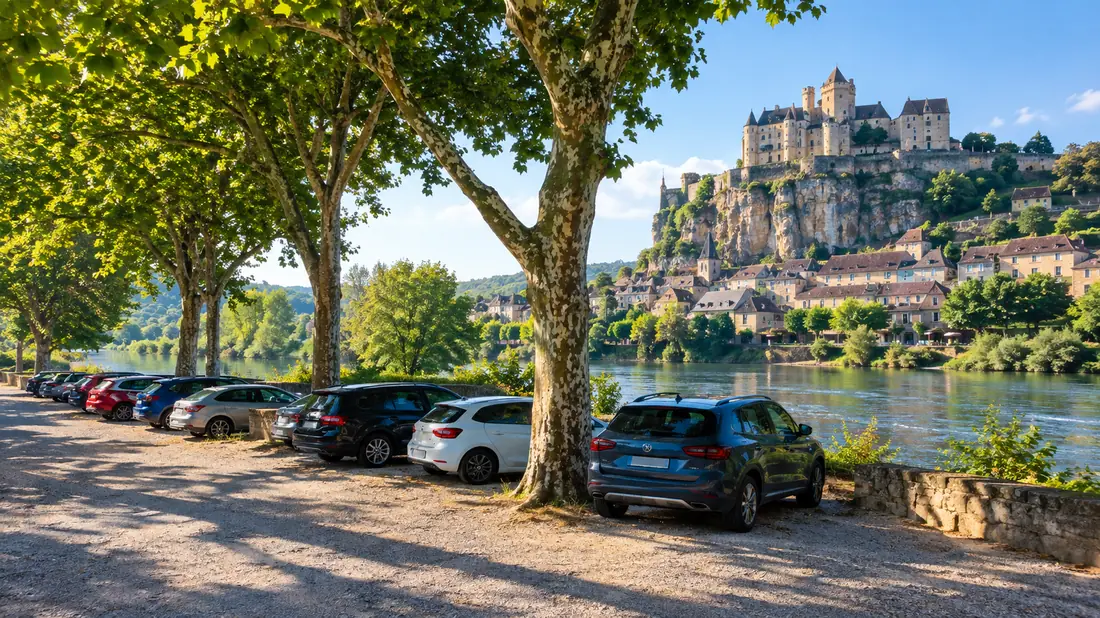
Then the parking, which is what most visitors are not expecting. Every lot in the commune is paid, every day of the year, from eight in the morning until seven at night, by coin, card or app. Two hours is the minimum and the rate rises by the hour to an eight-hour price, above which the eleven-hour rate is several times higher, so buy the hours you actually need. The two upper lots, Parking du Château and La Dîme, are the short way in and fill first in summer; place d’Alsace, Le Capeyrou, La Balme, Les Escassols and Le Crouzet sit low, by the river and in the village, with no shuttle between them. Every lot, with the tariff.
The walk up
From the upper car park the castle entrance is a one- or two-minute walk. From the riverside lots it is ten to fifteen minutes climbing through the village, on cobbles, past golden-stone houses in the quarters Beynac calls barris. This is one of Les Plus Beaux Villages de France and the climb is the reason people photograph it, but it is a climb. Inside, the castle states plainly that it is not suitable for visitors with reduced mobility: steps, uneven floors, a spiral stair. The lane, and what to wear.
The ticket, and the commentary on your phone
One of the five listings on the platform includes castle admission: the dated entry ticket, at around seventeen euros. It covers entry, the exhibition “Beynac in the time of Richard the Lionheart and Eleanor of Aquitaine” and the bookshop; it is valid one day from first use and cancels free up to 24 hours before. Under-tens go free, dogs on a lead are welcome, and there is a games booklet for children. The audio commentary is included and downloaded to your own phone at the entrance, in several languages, and runs there rather than on a device you collect, so arrive with some battery. What the ticket covers, beside the castle’s own 2026 tariff.
The hour inside, room by room
The castle’s own figure for the visit is about an hour, a good hour at most. It begins at the nineteenth-century barbican, through double crenellated walls and double moats, into the courtyard, then the hall of the guards and the Salle des États du Périgord, where the four barons of Périgord — Beynac, Biron, Bourdeilles and Mareuil — met in the fifteenth century under a sculpted Renaissance fireplace. The oratory holds fifteenth-century frescoes: a Last Supper in which Saint Martial is painted as the maître d’hôtel, a Pietà, the dead Christ awaiting resurrection, and a Saint Christopher. Above are seventeenth-century apartments with woodwork, painted ceilings, monumental fireplaces and the armoury room, reached by the twelfth-century spiral stair or by the open-work straight staircase in the Italian fashion added five centuries later. The thirteenth-century kitchen is still there, with its bread oven and the ceiling hooks that kept provisions away from rodents. The oldest part is the twelfth-century square keep, stone, put up in place of an earlier wooden one. The rooms, in order.
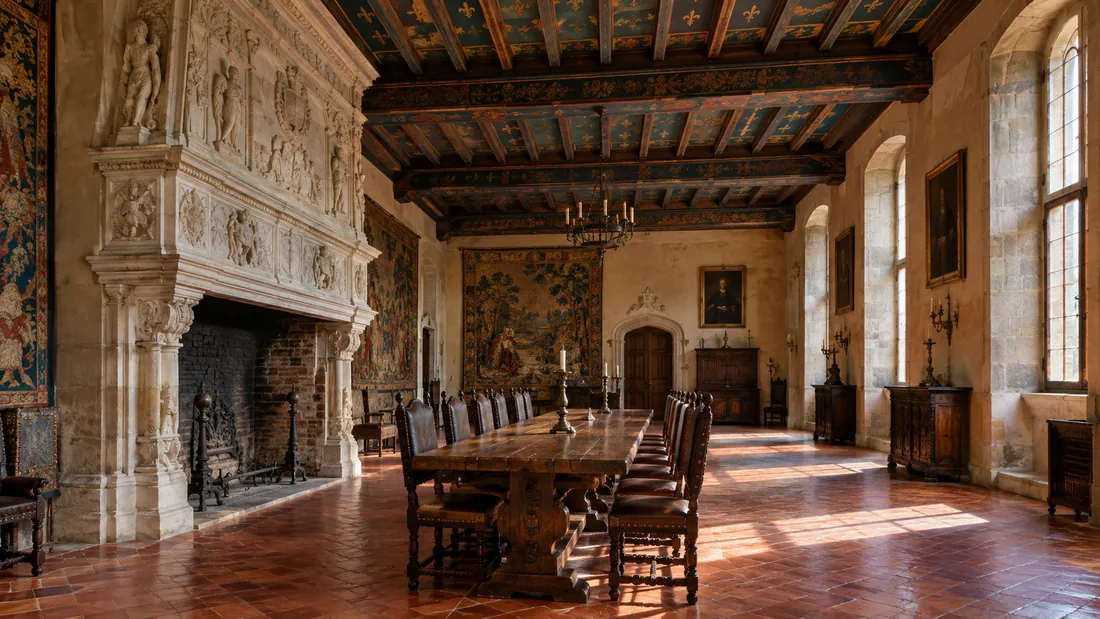
Five castles from the spur terrace
The terrasse de l’éperon is what people remember. From it, five castles are in view at once: Beynac itself, Marqueyssac, Fayrac, Lacoste and Castelnaud, and the castle’s own visit booklet and the Sarlat tourist office name the same five. The Dordogne was the frontier in the Hundred Years War, Beynac holding for the French crown and Castelnaud, across the water, for the English — the reason so much stonework is stacked into one stretch of valley. The barons, the frontier and what came after.
Which of the five suits you
The entry ticket fixes a date and is the only listing that includes admission. The half-day tour from Sarlat, around a hundred and ten euros, solves the driving: four hours by van from Place Pasteur, a 45-minute guided walk of the village, a gabarre at La Roque-Gageac and a long stop at Domme. It walks the village rather than entering the castle, so pair it with the ticket. The private tour, around a hundred and sixty-three euros, is the only listing with a guided hour inside, admission paid on the day; from January to mid-February that hour happens at Castelnaud instead. The two paddling routes are the view from the water: the three-hour canoe rental from Vitrac, around twenty-nine euros, under the Beynac cliff, and the 15 km châteaux route, around twenty-eight euros, about two and a half hours with a bus transfer. Both need paddlers over five who can swim 25 metres. All five, sorted by situation.
In one sentence
Getting in is the easy part — open every day, about an hour inside — so the decision worth making is how you arrive and what fills the rest of the day. The widget above has live dates.
Frequently asked questions
What castle did Richard the Lionheart build?
Château Gaillard, at Les Andelys in Normandy, raised between 1196 and 1198. He did not build Beynac and no source has him living in it. What he did was dispose of it: when Adhémar de Beynac died without a direct heir in 1194, Richard, as Duke of Aquitaine, handed the castle to Mercadier, the routier captain who had held his Aquitaine fortresses during the crusade. The 1194 handover, and what followed.
Is Beynac castle in France?
Yes. It stands at Beynac-et-Cazenac in the Dordogne département, in the Périgord Noir, on a cliff more than 150 metres above the Dordogne river, about 10 km from Sarlat-la-Canéda. The nearest station is Sarlat-la-Canéda, and Bergerac, Brive and Bordeaux-Mérignac are the airports used for the region. Where Beynac is, precisely.
What is the difference between a château and a castle?
In French, château covers both the fortified castle and the grand country house, so the word alone does not tell you which you are looking at. Beynac is a château fort — a fortress, with a keep, crenellated walls, moats and a barbican, built to control a river valley — and not a Loire-style pleasure house. The barons, and what they built.
Is the Château de Beynac worth visiting?
For a castle that is furnished rather than ruined, yes. The rooms are in place: painted ceilings, a sculpted Renaissance fireplace in the Salle des États, fifteenth-century frescoes in the oratory, a thirteenth-century kitchen with its bread oven, and a terrace with five castles in view. It is one hour of walking on steps and uneven floors, which is the honest catch. Who will enjoy it, and who will not.
How long do you need at the Château de Beynac?
The castle’s own figure for the inside is about an hour, a good hour at most, and the ticket is valid one day from first use. Add ten to fifteen minutes up from the riverside car parks, or one to two from the upper ones, and as long as you like in the village. A realistic slot is a half day. What fits around it.
Beynac or Castelnaud — which castle should I choose?
They are different visits. Beynac is preserved and furnished, self-guided, independent, and has the view; Castelnaud, directly across and upstream, is a restored ruin holding the Musée de la guerre au Moyen Âge, with full-scale trebuchets and mangonels and a model of its 1442 siege — the hands-on one, and the better bet with children. Both, and in which order.
What is the golden triangle in the Dordogne?
Nothing official. The phrase appears on accommodation and camping sites with no consistent definition and no tourist-board map behind it, so it is worth treating as marketing rather than geography. The real region is the Périgord Noir, the south-east of the Dordogne département centred on Sarlat, named for its dark oak woods and dark soil. What is actually worth the drive.
Which airport is closest to the Dordogne valley?
The Périgord Noir is served by Bergerac Dordogne Périgord, Brive Vallée Dordogne and Bordeaux-Mérignac, all with car hire on site. By road the tourist office publishes about two hours from Bordeaux, two from Toulouse, four from Lyon and five and a half from Marseille, using the A20 and the A89. Roads, trains and the summer bus.
Still have questions? Email us [email protected]